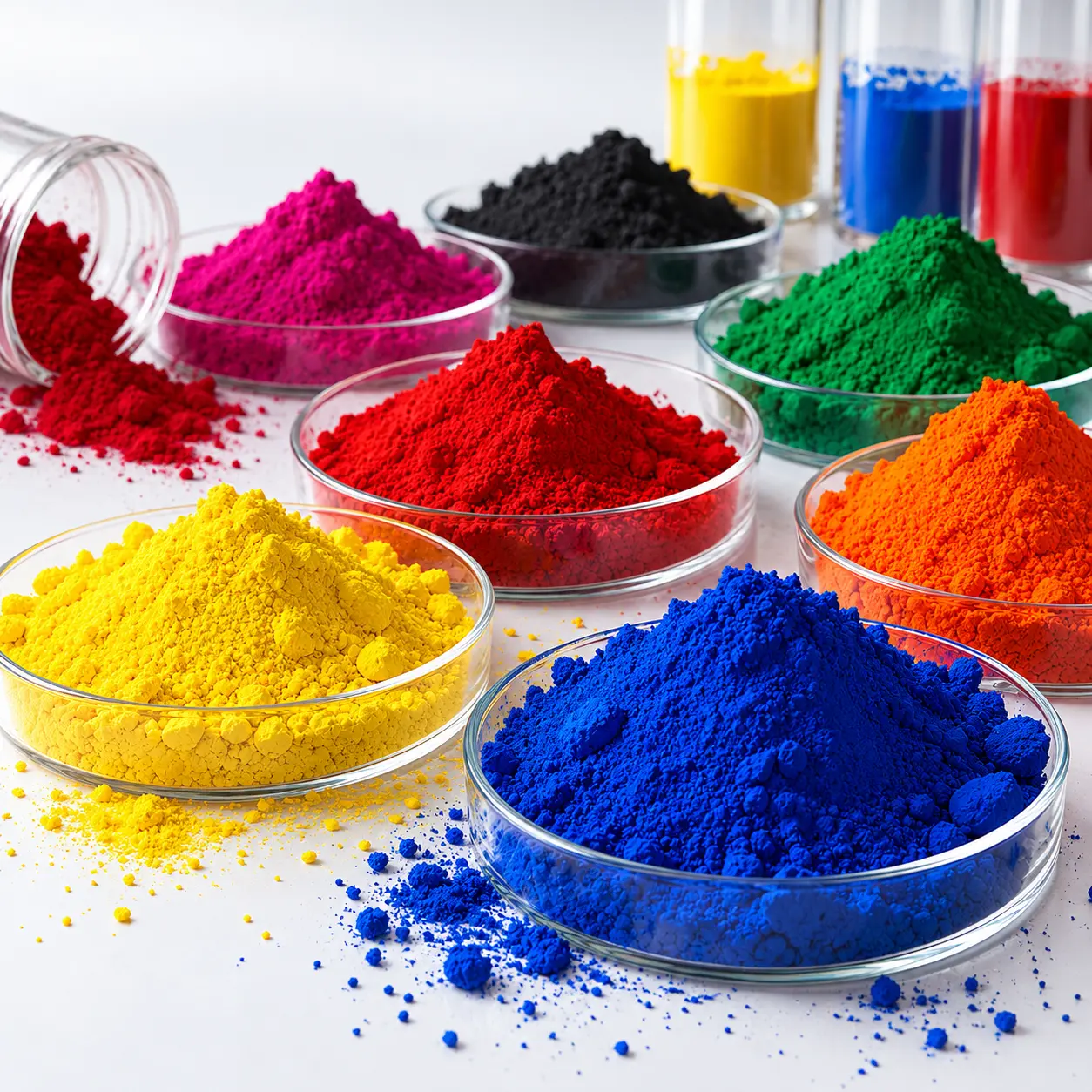

Epoxy Resin Pigments: How to Choose the Right Pigment
Epoxy resin is widely used in decorative coatings, artistic castings, flooring, furniture, jewelry, and industrial applications. The right pigment can significantly influence the final appearance, color consistency, and visual effect of an epoxy system. However, not every pigment is suitable for every resin formulation.
When selecting pigments for epoxy resin, it is important to consider resin compatibility, transparency, dispersion, dosage, and the desired finish. This guide explains the main factors to evaluate before choosing a pigment for your application.
1. Choose the Pigment According to the Desired Effect
The first step is to determine the appearance you want to achieve. Different pigment types create different visual results, from solid opaque colors to transparent shades and metallic-looking effects.
Organic Pigments
Organic pigments are often selected when strong, vivid colors are required. Depending on the pigment chemistry and grade, they can provide bright shades and high color strength. Their suitability for epoxy resin should be verified for the specific formulation and application.
Explore Tüver Pigment's organic pigments to learn more about available pigment options.
Inorganic Pigments
Inorganic pigments are commonly used for applications requiring specific properties such as opacity, durability, or resistance to environmental conditions. Performance varies by pigment type, so heat resistance, chemical resistance, and compatibility should be checked against the intended use.
Discover the range of inorganic pigments for different industrial coloring requirements.
Pearlescent and Effect Pigments
Pearlescent pigments create visual effects such as shimmer, luster, and changing reflections. They can be used in selected epoxy applications to achieve decorative surfaces, artistic castings, and distinctive finishes. The final effect depends on particle size, orientation, resin clarity, and application technique.
See pearlescent and effect pigments for decorative color solutions.
2. Consider Transparency and Opacity
Transparency is one of the most important factors when coloring epoxy resin. Some projects require a clear resin with a subtle tint, while others need a solid, opaque finish.
- Transparent or translucent appearance: The pigment and its concentration must allow the desired level of light transmission.
- Opaque appearance: The selected pigment must provide sufficient hiding power at the intended concentration.
- Pearlescent appearance: Resin clarity and the distribution of effect pigment particles influence the final result.
The final appearance also depends on the resin system, casting thickness, background color, and curing conditions. Always test the complete formulation rather than evaluating the pigment in isolation.
3. Check Compatibility with the Epoxy System
Pigment compatibility is essential for obtaining a stable and consistent result. A pigment that performs well in one application may not produce the same outcome in another resin formulation.
Before production, evaluate the following:
- Compatibility with the specific epoxy resin and hardener
- Effect on curing and final surface properties
- Dispersion quality and color uniformity
- Resistance requirements for the finished product
- Suitability for the intended indoor or outdoor application
Do not assume that every pigment is suitable for epoxy resin. Confirm the recommended application and technical specifications with the pigment supplier, and carry out a small-scale test before production.
4. Achieve Uniform Pigment Dispersion
Uneven dispersion can lead to streaks, spots, inconsistent color, or visible agglomerates in the cured resin. Proper mixing is therefore important for a uniform finish.
- Add the pigment gradually according to the formulation procedure.
- Mix thoroughly while avoiding unnecessary air entrapment.
- Check for visible particles or color streaks before casting.
- Follow the resin manufacturer's mixing and curing instructions.
The appropriate mixing method depends on the pigment's physical characteristics and the viscosity of the resin system. Some pigments may require a different dispersion approach from others.
5. Determine the Appropriate Pigment Dosage
There is no single pigment dosage that works for every epoxy resin application. The required amount depends on pigment strength, the desired color intensity, resin characteristics, and the final effect.
Start with small laboratory trials and increase the concentration gradually until the target appearance is achieved. Excessive pigment loading may affect flow, transparency, surface appearance, or curing performance, depending on the pigment and formulation.
Record the formulation, mixing procedure, and curing conditions for each trial. This makes it easier to reproduce the selected color and finish during subsequent production.
6. Common Problems When Coloring Epoxy Resin
- Uneven color: May result from insufficient dispersion or inconsistent mixing.
- Unexpected opacity: May be caused by the pigment type or concentration.
- Pigment settling: Can occur depending on particle characteristics, resin viscosity, and the time before curing.
- Changes in curing: May indicate incompatibility or excessive pigment loading; test the complete system.
- Different final shades: Can result from variations in layer thickness, background, lighting, or curing conditions.
A controlled test batch helps identify these issues before material is used in a larger production run.
Conclusion
Choosing the right pigment for epoxy resin requires more than selecting a color. Pigment type, compatibility, transparency, dispersion, dosage, and application conditions all influence the final result.
Tüver Pigment supplies pigment solutions for a range of industrial and decorative applications. To identify a suitable option for your epoxy project, review the relevant pigment categories and confirm the technical suitability of the selected grade for your specific resin system.
Explore organic pigments , inorganic pigments , and pearlescent and effect pigments from Tüver Pigment.